Two ways to live on the same square
The county is split the way a good story is split: not by fence lines, but by what a person is willing to notice.
 Arkatype Farms
Arktopia County · the Ozarks
Arkatype Farms
Arktopia County · the Ozarks
Home · The County
The county is split the way a good story is split: not by fence lines, but by what a person is willing to notice.
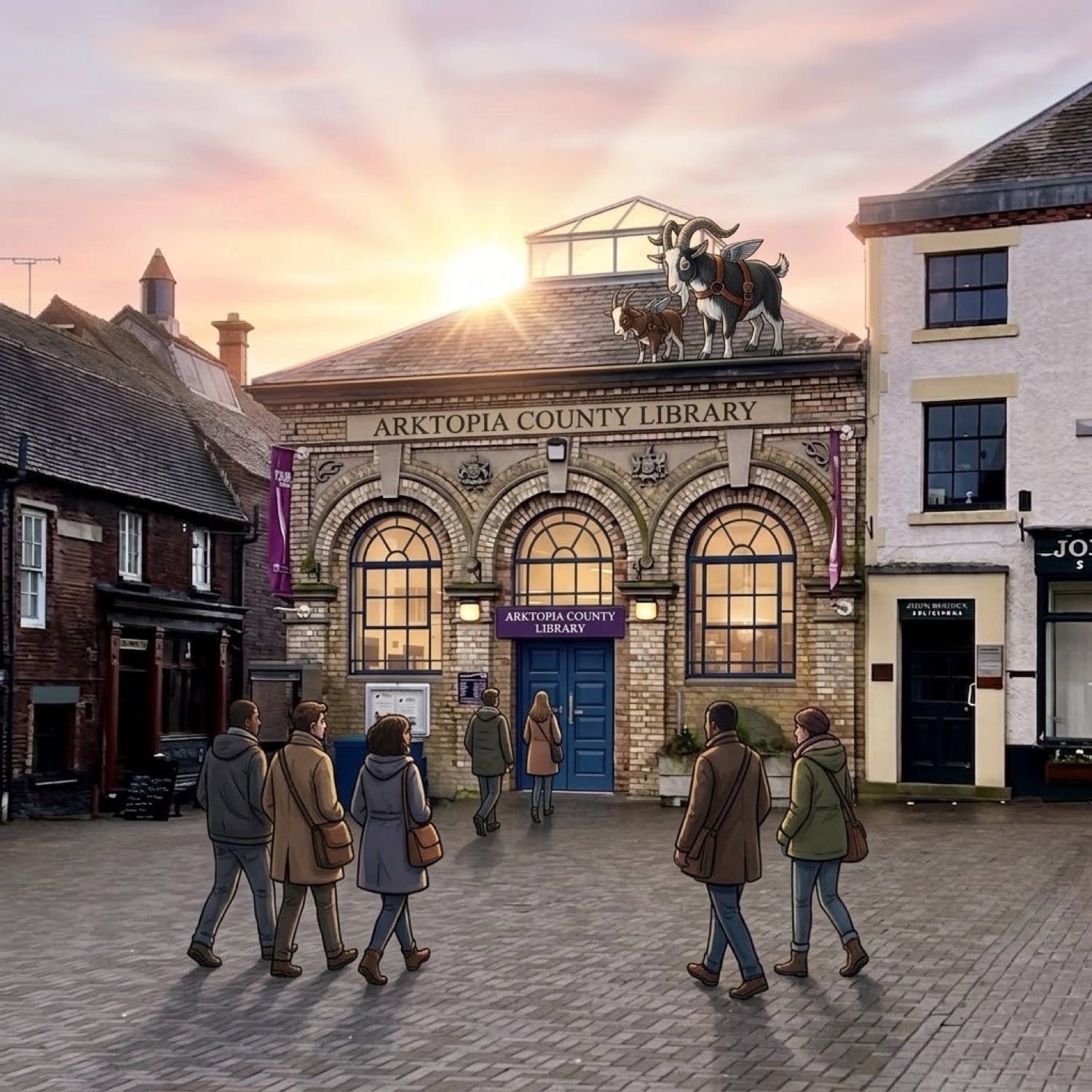
Content. They use the library as a library. They take the sky for weather. They walk through the cobbled square at opening and do not hunt the mist. By day the library door reads as stained glass in a pale brick civic face — three arched bays, blue double doors, a purple ARKTOPIA COUNTY LIBRARY sign, a glass lantern on the roof. Ordinary townsfolk go in. They do not see the winged goats on the tiles.
Seekers. Awake to Blue Mist, myths, legends, hidden histories. They pursue them. After the square empties, the smart critters sneak through town. A cloverfolk night porter greets them at the arch. At night the stained glass becomes a door: stone stacks, ivy, forest-green light, a spiral stair.
Arktopia County Library is a civic building by day and a door by night. On the walls, in both lights, it keeps the first clerks of these hills — the folklorists who wrote the ridges down before Arktopia had a name for Squarefolk and Cloverfolk.
When you seek beauty, take beauty with you.
There is peace and contentment and fullness of life in the out-of-doors if you know the latitude and the longitude of the heart.
Color and contour mean nothing to the individual whose inner harp has a broken string.
— Otto Ernest Rayburn, Rayburn’s Arcadian Life, A Journal of the Well-Flavored Earth, Volume I, Number 8, July 1934. Framed in the front gallery, opposite the purple sign’s inside face.
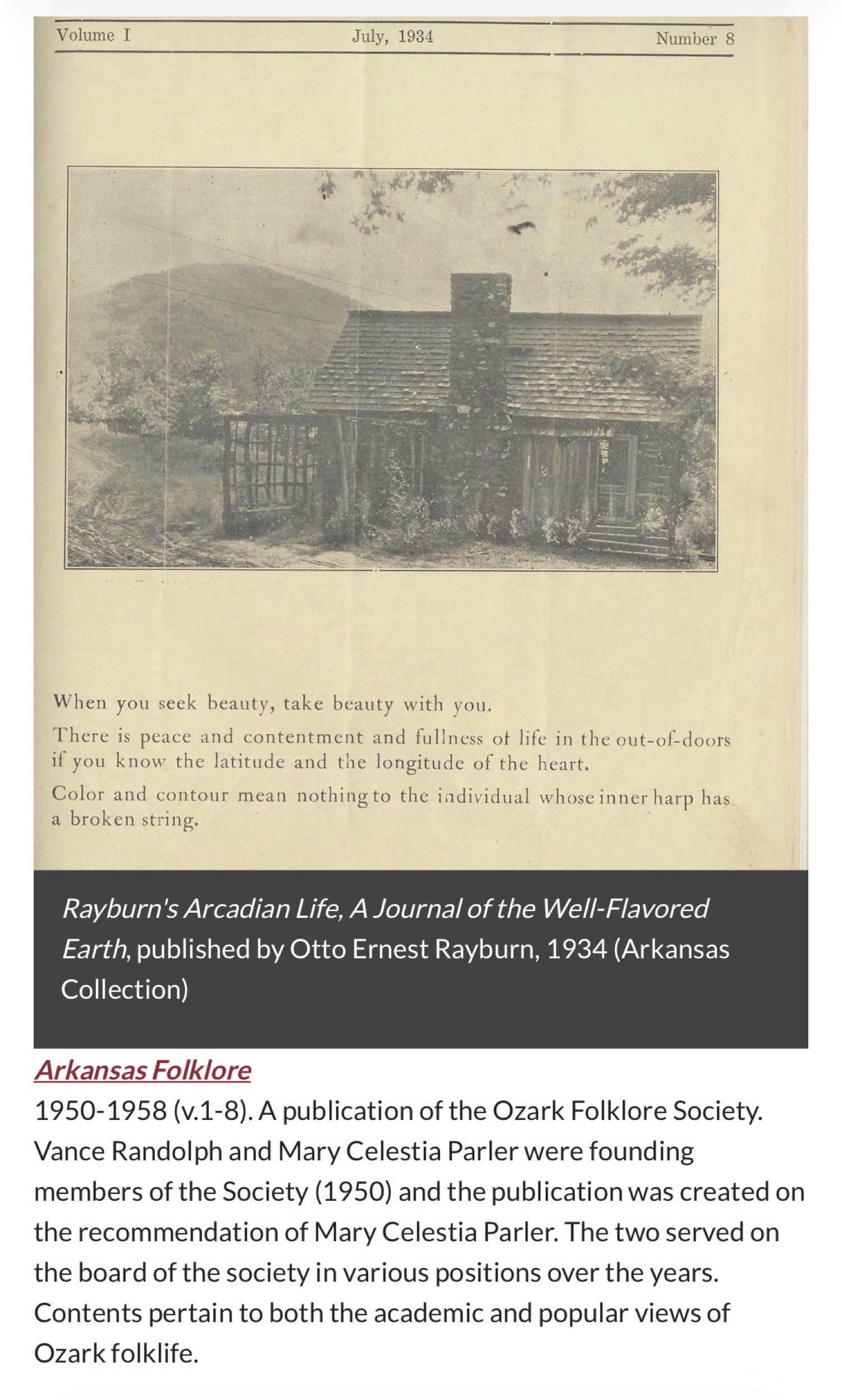
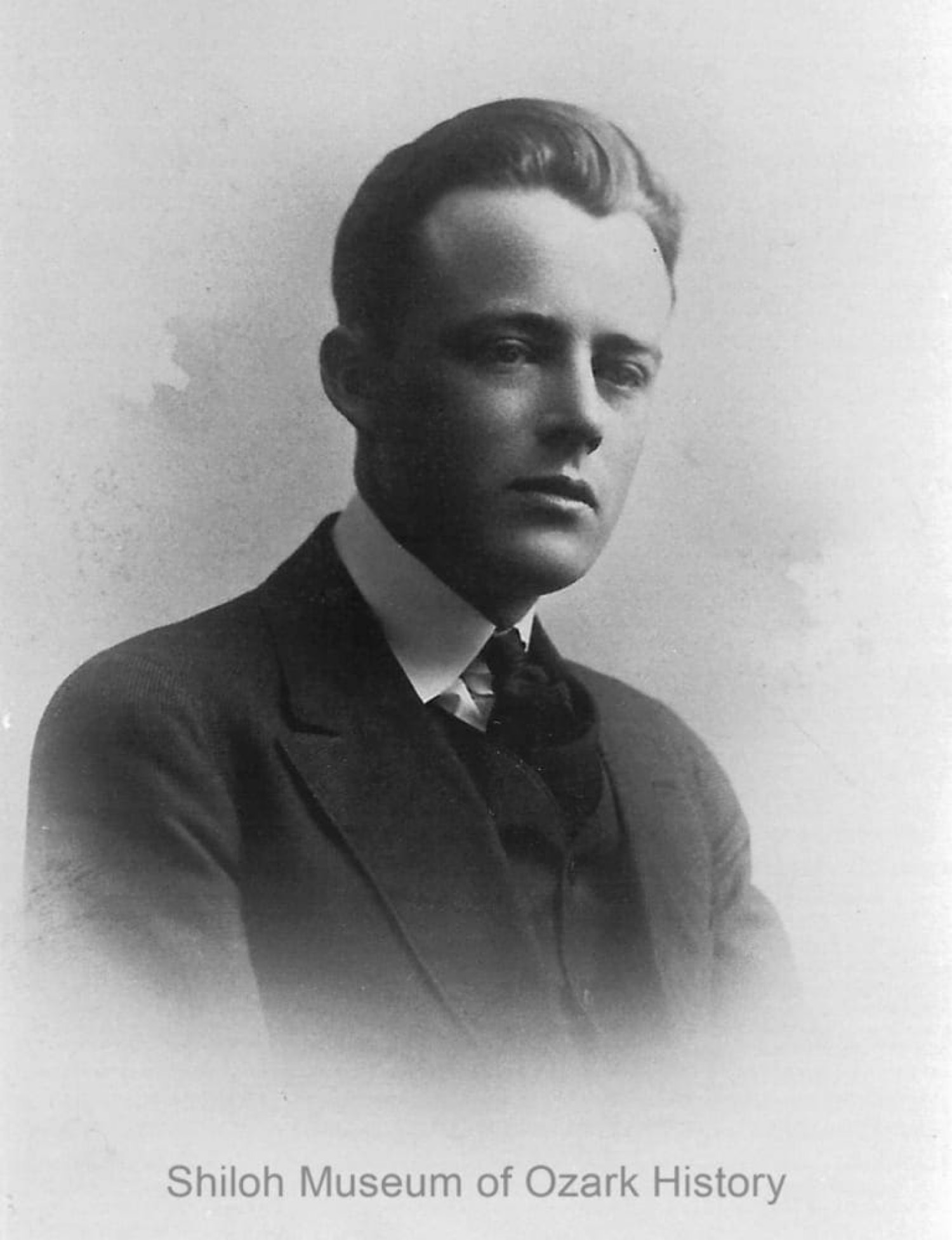
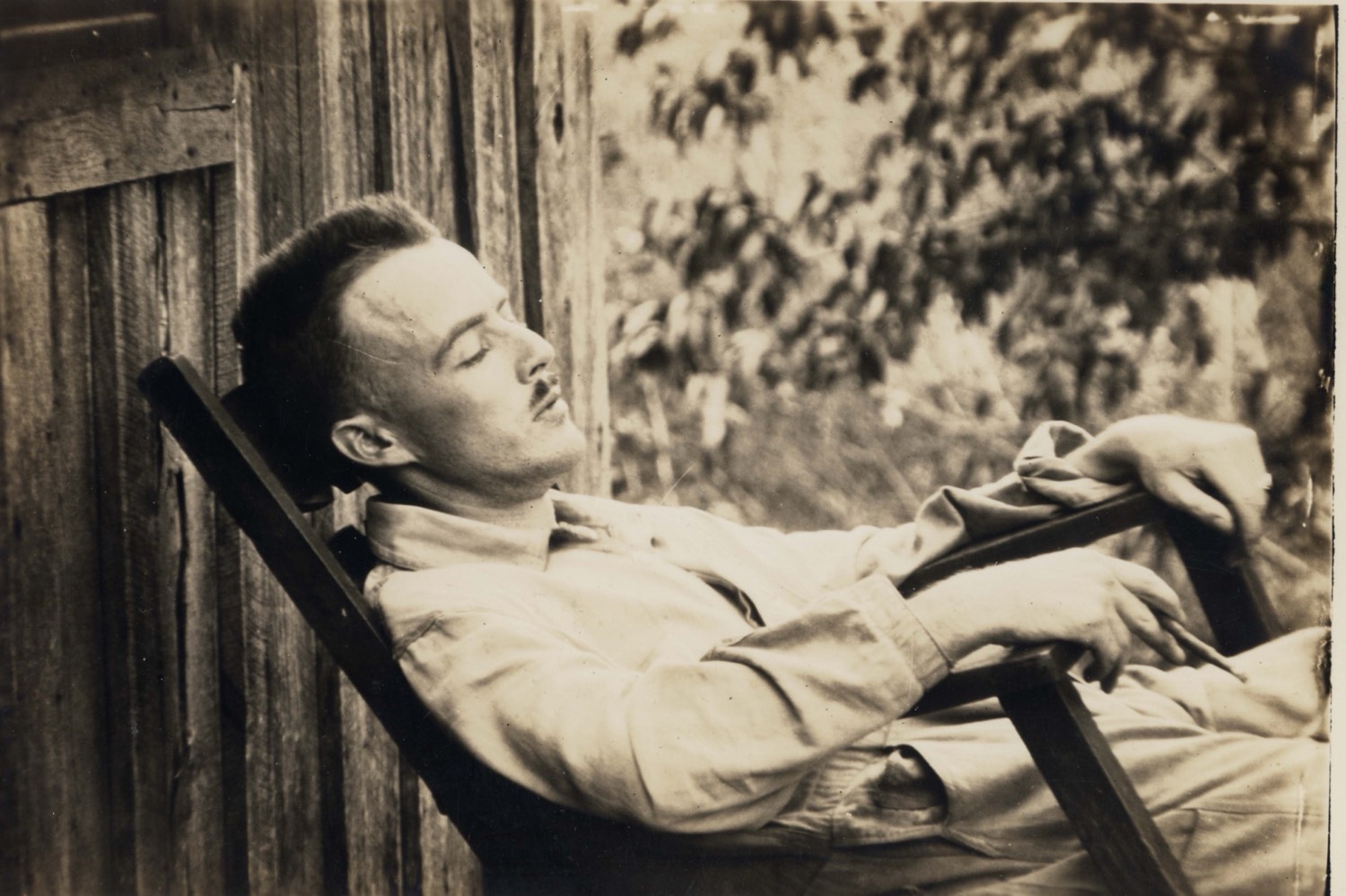
1891–1960. Writer, magazine man, collector of the well-flavored earth. Ozark Life, then The Arcadian, then Arcadian Life. Vance Randolph said that between 1925 and 1950 Rayburn did more to wake popular interest in Ozark folklore than all the professors put together. The library keeps Volume I, Number 8 where the light from the center arch can find it.
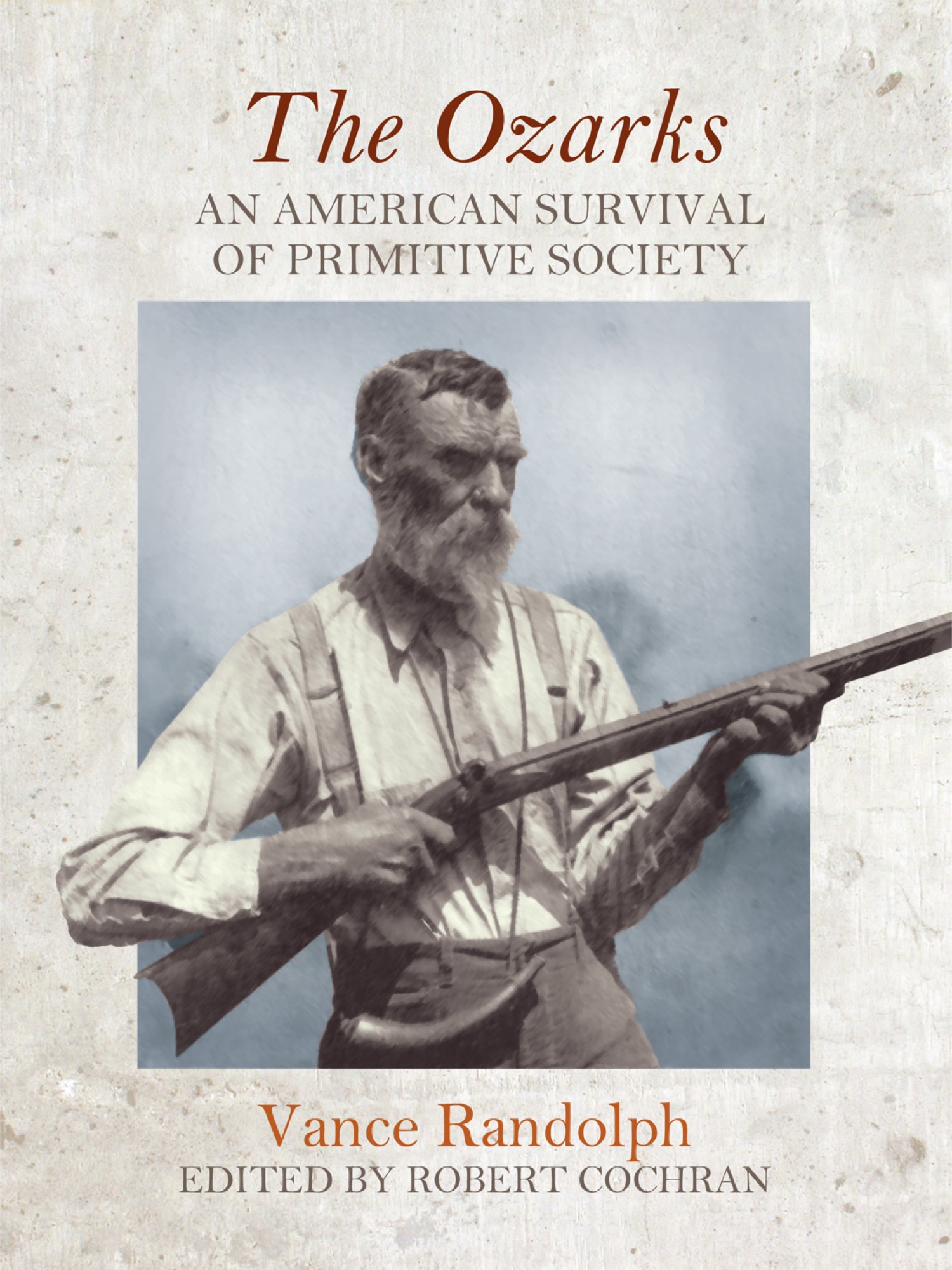
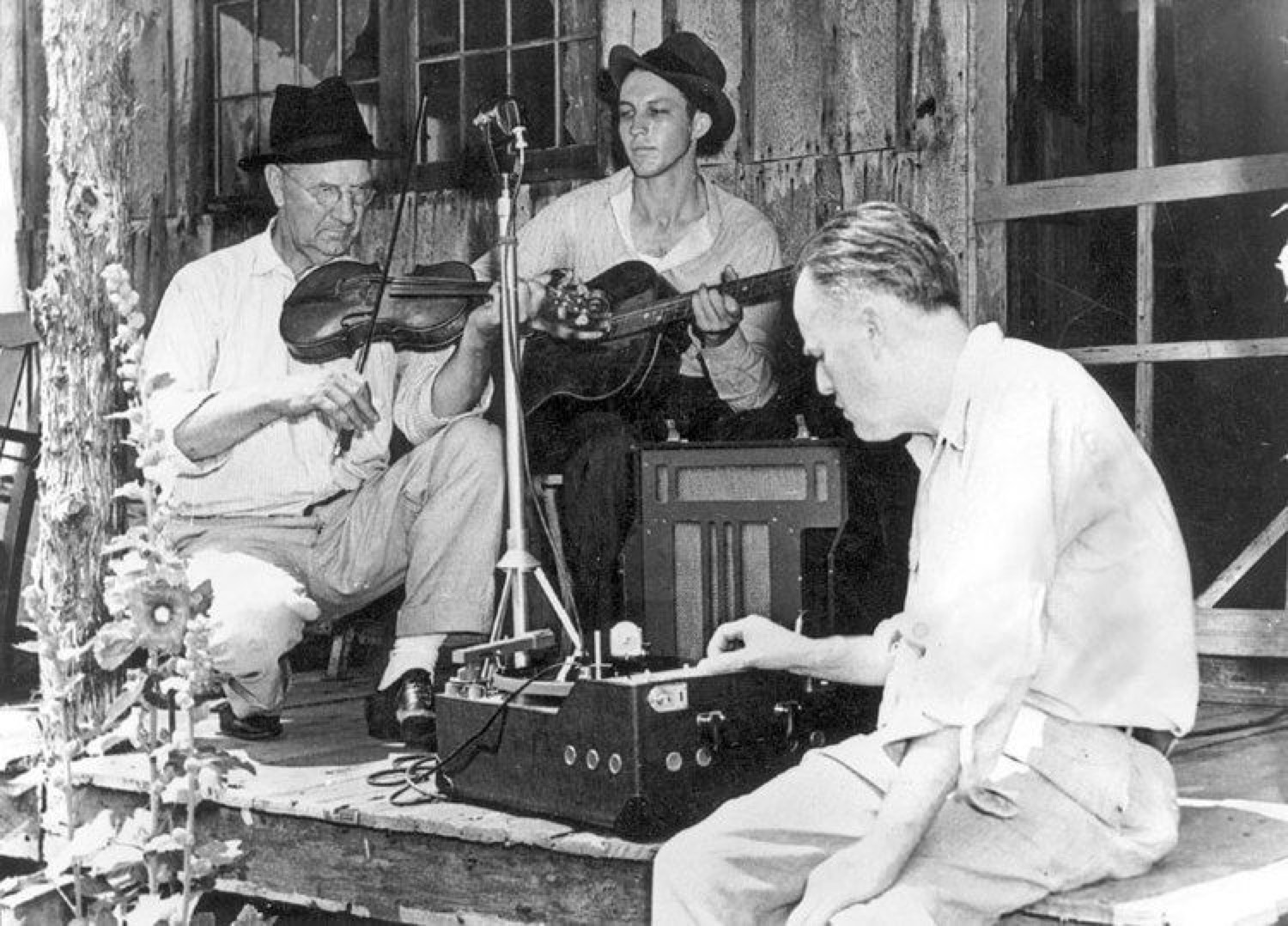
Randolph (1892–1980) walked the hills and wrote them. First book-length portrait: The Ozarks: An American Survival of Primitive Society (1931; the library keeps the Cochran edition on the gallery shelf). Parler (1904–1981) built the University of Arkansas folklore course and the archive the songs still live in. They helped raise the Ozark Folklore Society (later the Arkansas Folklore Society). Arkansas Folklore, 1950–1958, sits on the same shelf as Rayburn — academic view and kitchen-table view bound in one county.
The wonders they wrote down already live in the Dodecahedron and go in and out at will. The library does not trap them. It names who listened first. Some cloverfolk add: the Night Porter never clocked out.
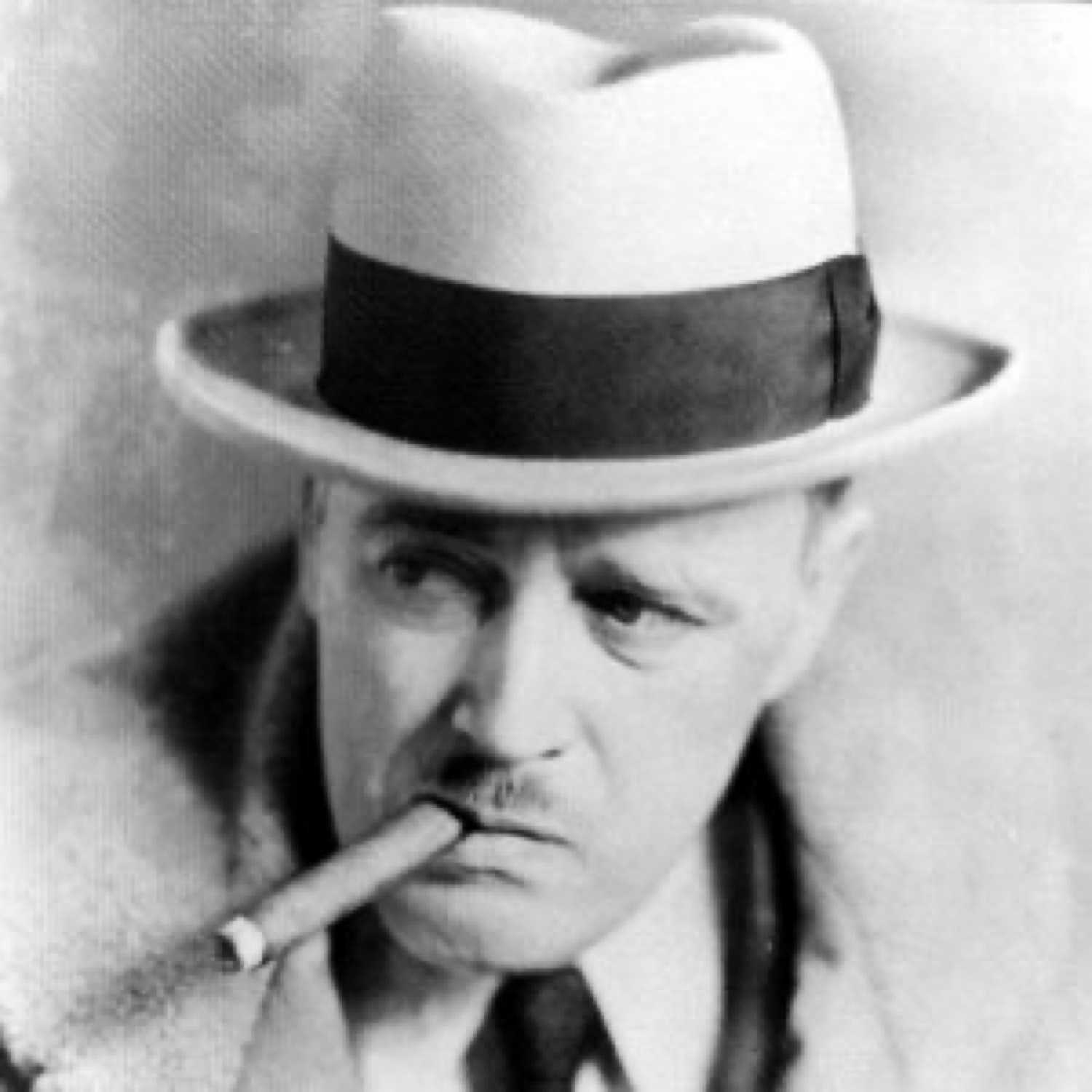
Cloverfolk. Keeps the arch at Arktopia County Library. Does not live at the farm. When the cobbles are empty, the stained glass becomes a door, and the smart critters are met on the step.
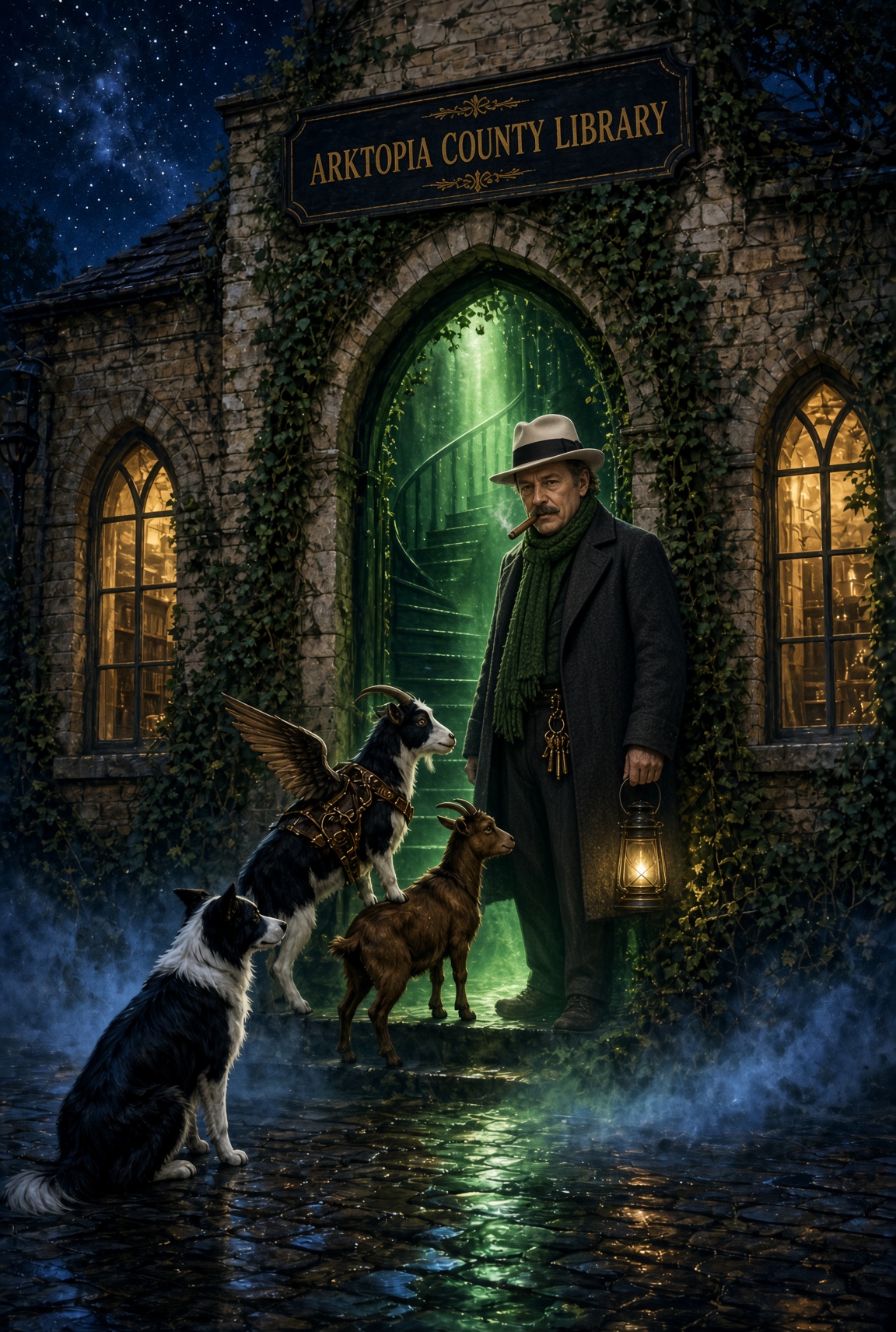
Keys on the ring. Lantern in the hand. Light fedora with a dark band. Cigar in the mouth — that is a requirement of the office. Forest-green scarf for the light that is not electric. Squarefolk never see this shift; they are home, which is a kindness. Tucker comes in the harness. The brown goat comes with him. Charlotte sits first and is counted. The porter does not collect a ticket. The greeting is the whole job.
Some cloverfolk say he is the same listener who slept at the Southern Hotel in Springdale in 1920 and wrote the hills down. He does not confirm. He lights the cigar and opens the arch. The office is still enough for the sign.
Cloverfolk. They work the county, not the hill. Squarefolk file missing gates and weather that will not sit still. Cloverfolk file the same paper and keep a second notebook for what the first one cannot hold.
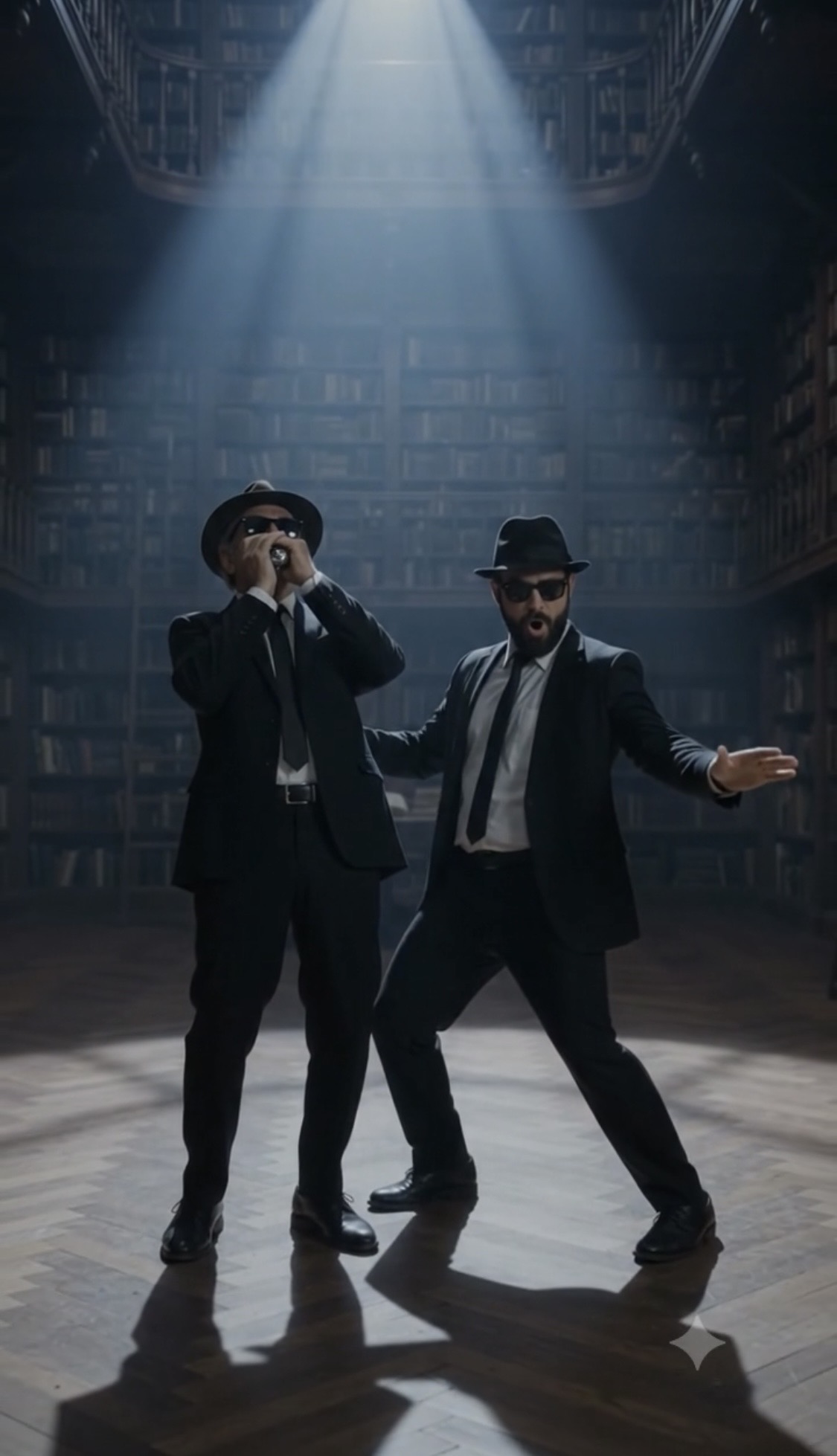
The office does not advertise Blue Mist. It does not have to. Mr. Jake brings the glass. Mr. Elwood brings the clipboard. Between them the ridge is written twice — once for the courthouse, once for the seekers who already know the square has a night side. After hours they play old blues. The courthouse does not list that on the door. The cloverfolk already know which records come out of which desk.
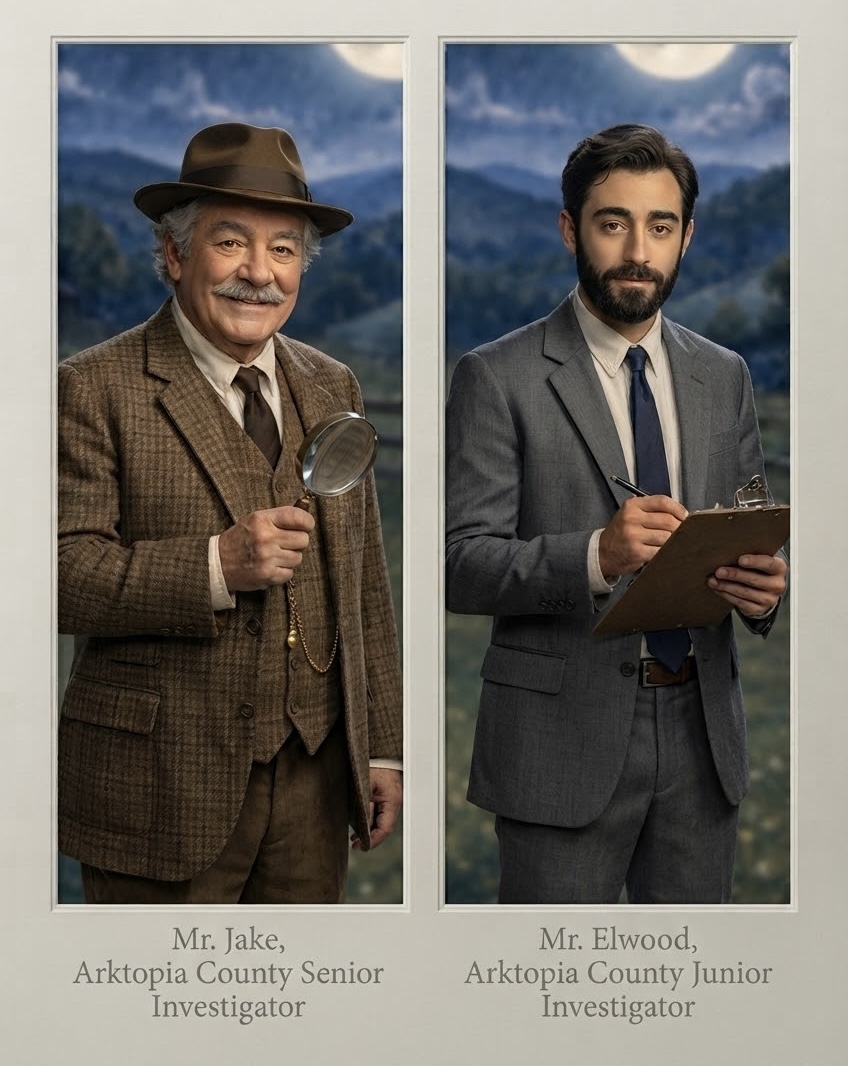
Arktopia County Senior Investigator. Older cloverfolk, built like a barrel that learned to dance. Brown fedora, brown tweed three-piece, gold watch on the chain, a smile that has already seen the odd thing and decided to be kind about it. The magnifying glass is not theater. He uses it on dew, on hoof-prints that stop in open grass, and on letters that arrive already answered. When the square empties he sings the old blues like a man who has lived every verse.
Squarefolk like him because he looks like a man who still believes in a tidy file. Cloverfolk like him because he never pretends the file is the whole hill.
Arktopia County Junior Investigator. Younger cloverfolk, tall as a fence post in a grey suit. Navy tie, beard kept for the courthouse photograph. The clipboard is the second notebook: dates, weather, who saw what, and a quiet line underneath for what the weather will not explain. He takes the other mic when Jake starts a twelve-bar. Deadpan. In time. The tall one keeps the beat the short one spends.
He does not argue with Jake in the square. He argues in the margin. That is how the office stays open in both lights.
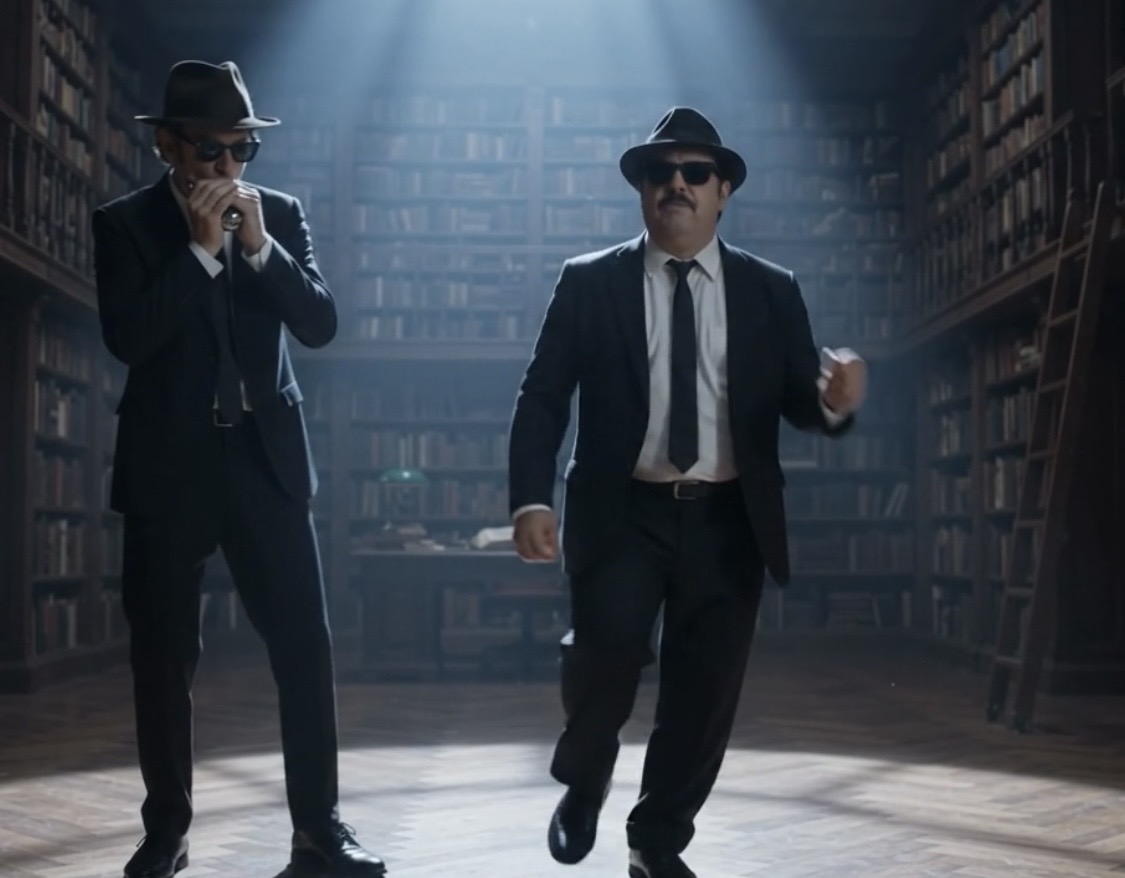
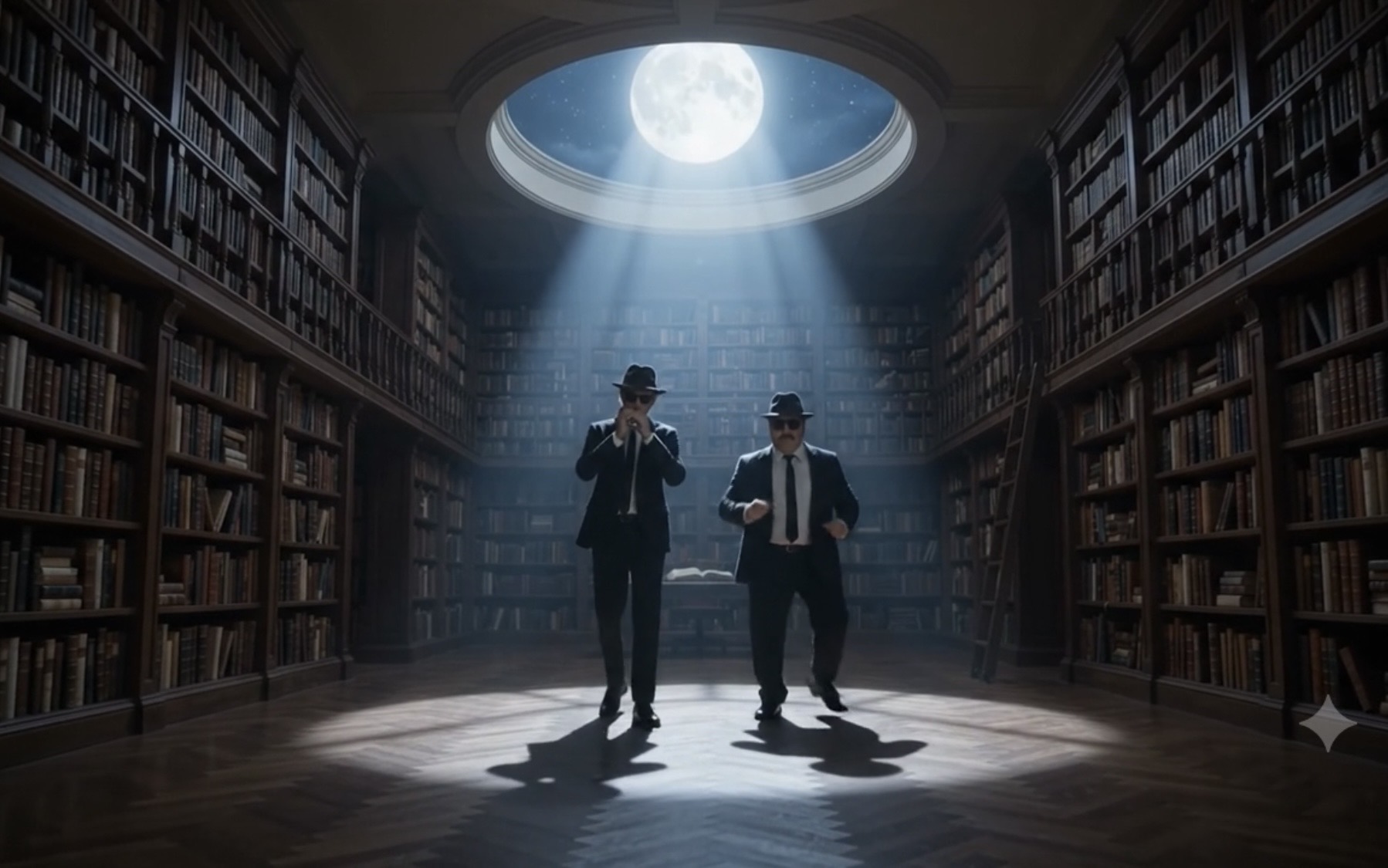
When the Night Porter has opened the arch and the smart critters are counted, the investigators put the glass and the clipboard down. Black suits. Dark glasses. The old blues. Squarefolk never hear this set. They are home, which is a kindness to the floorboards.
Elwood takes the harmonica. Jake spends the verse. The moon finds the oculus. The courthouse still thinks they only file weather.
They are not only courthouse men. After a Baptist wedding on the farm — Goat Maiden in the lace and brown vest, Bramble in the flower crown and the lemonade panniers, Charlotte keeping the aisle — Dolly reached for the cloth bag that held the day’s tips and found air. Jake brought the glass into the tall grass. Elwood checked the benches and the gardens off the clipboard. The guests helped. Charlotte worked the flowerbeds with her nose.
The bag had not fallen. It had hooked on Bramble’s buckle while they walked the toasts. Dolly found it with her own hand when the goat nudged her. The office still writes the case as closed: not stolen, not mist, only a pannier that kept what it was asked to carry.
Dolly’s Moonlit Mystery — ten pages on the Critter Line, written down at Arkatype Farms.

Arthur, Sterling, and Mara work at the Food Closet in town. They do not sleep on the hill. They come with Dolly and Charlotte on Fridays to deliver rescued grocery food, put on the white jackets, and help the field become a dining room. Then they go back to the county.
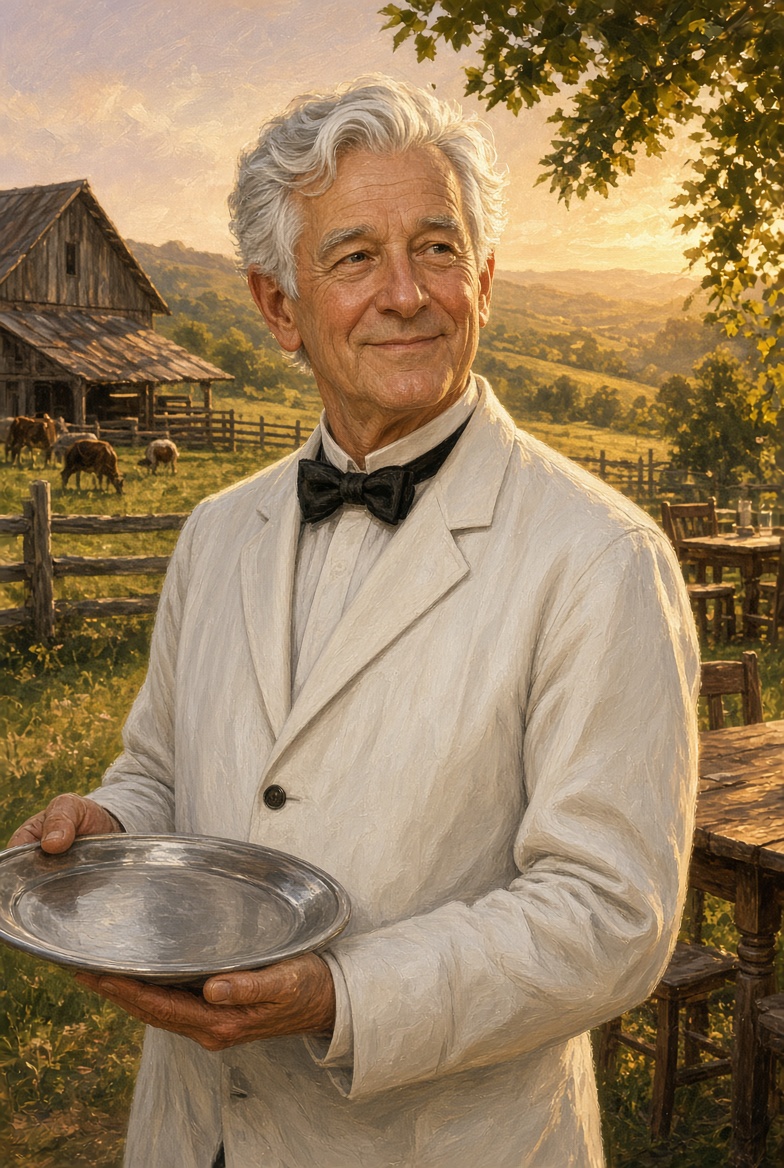
Older white man. Works at the Arktopia County Food Closet. Comes Friday to deliver, then serves. The polite bow is not an act. “Good evening, Sir Pig,” he says, and means it.
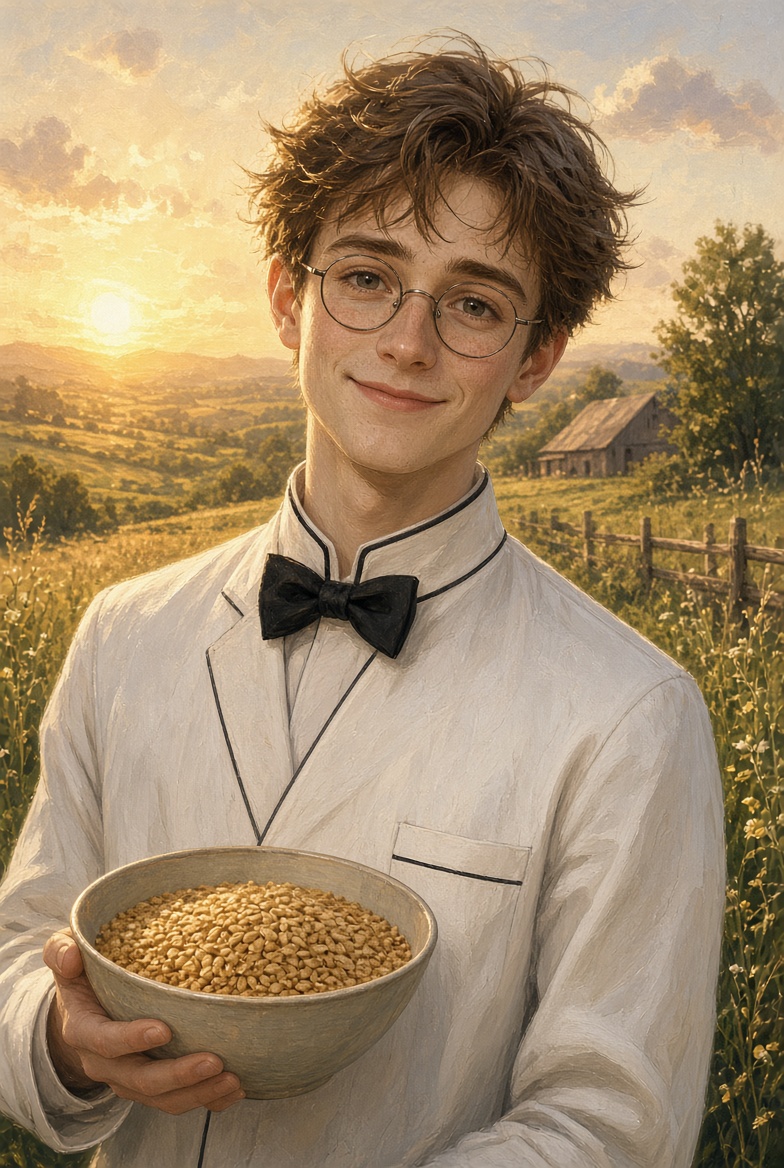
Younger white nerd. Works at the Closet; takes inventory like a theorem. On Fridays: golden grains, fresh lettuce, and the question that makes the hens cluck. “A little more corn for the lady?”
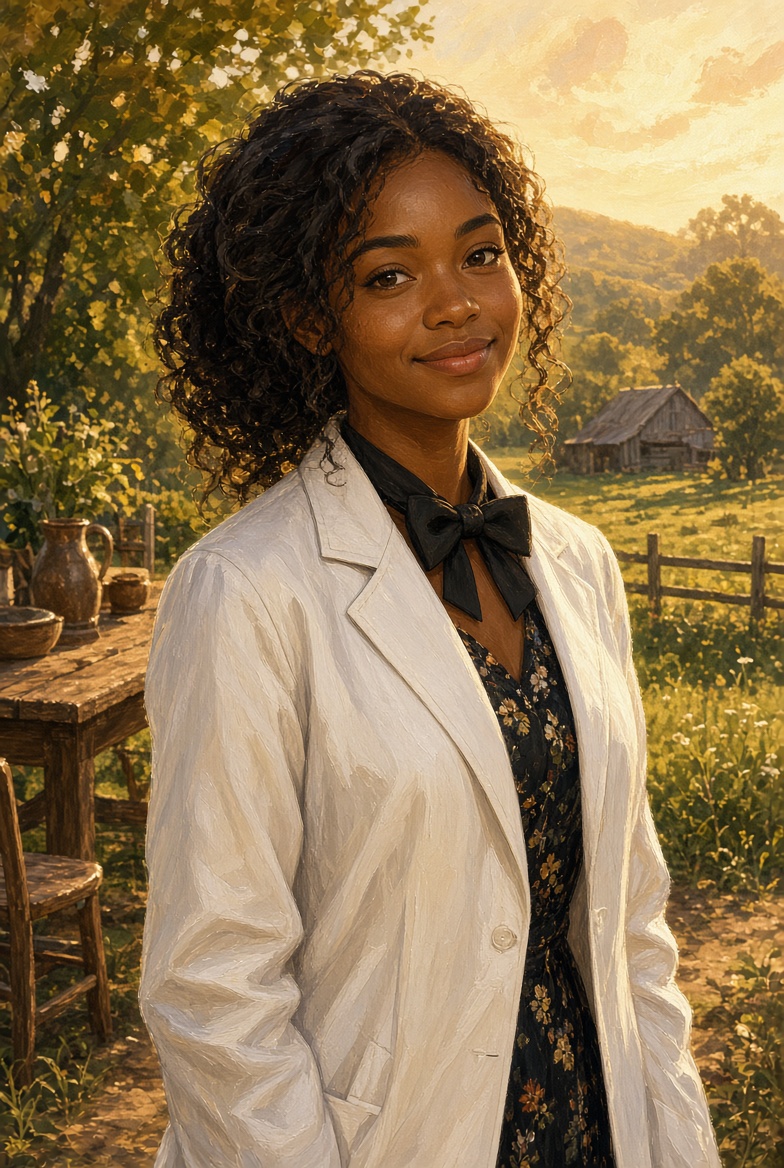
New girl at the Closet. Black. She understood that cats will sit in little wooden chairs if the plates are small and the fish is honest. Polite guests. She matches them.
The old word muggle has been retired. It was never quite right for people who simply wanted the library to be a library. Squarefolk are not the enemy. They are the reason the day door looks like glass.